* kaLabhras had been identifiied in various ways as kaLappirar, kaLappaazhar, kaLappaaLar, kaLambaazhar.
* thalavaaipuram(தளவாய்புரம்) copper plates (probably dated around 1020s and 30s) identify those rulers as kaLappaazhar/kaLappaaLar (களப்பாழர்/களப்பாளர்), while vElvikkudi (வேள்விக்குடி) copper plates identified them as kaLappirar (களப்பிரர்).
* in the addendum of that book, A. marx further summarises, kalabhras were from kaLapappu (shravanabelagola, in modern times. https://en.wikipedia.org/wiki/Shravanabelagola ); their realm stretched upto kOlaalapuram (kOlaar in modern time. https://en.wikipedia.org/wiki/Kolar ).
* so, kalabhras are of dravidian stock from current kannada, not outsiders as KANS and some others tried to project.
* during kalabhras rule, jainism and buddhism thrived; A. Marx says they themselves were followers or supporters of vaishnavism( because, achyuthan is a name associated with vaishnavism); while the author mr. seeni says they were supporters of jainism (because it flourished). former of these two arguments seems acceptable.
* at the end of last sangham period, continuous internal wars- -which were faught for war's own sake and for glory- among kings of various dynasties rendered their realms weak and defenseless, some times leaderless after protracted wars. these conditions attracted kalabhras from erumai naadu- buffalo country (current shravanabelagola) to wage war and rule ancient tamil lands.
* the absence of strong centralized regional powers and kings encouraged the fringe people to wage wars.
* though kalabhras were followers of vaishnavism and stood neutral towards other religions, people from other religions-esp jains- supported kalabhras; jains supported kalabhras simply because....kalabhras were neutral while other tamil kings were oppressive;
* these kalabhra rulers were loathed by the local chieftains and aggressive hindus- so there was less social support from people with settled-agriculture in plains. people with shifting-agriculture, those from dry lands, hillcountry and nomadic lifestyle were supporters of kalabhras. these are as observed by A. Marx. acceptable.
* people with clan based association and culture settled on hillcountries and drylands; they were more glorious during sangham periods but were declining during AD200 because of their uproductive shifting agriculture methods; while those settled in plains assisted in their more productive agriculture methods by good irrigation were slowly gaining grounds in political, social and religious fronts during the same period.
* while the chera, chozha, pandiya, pallava kings were more favourable towards hindu-high class people, kalabhras were neutral towards all people. hinduism was based on inequality while jainism & buddhism were neutral.
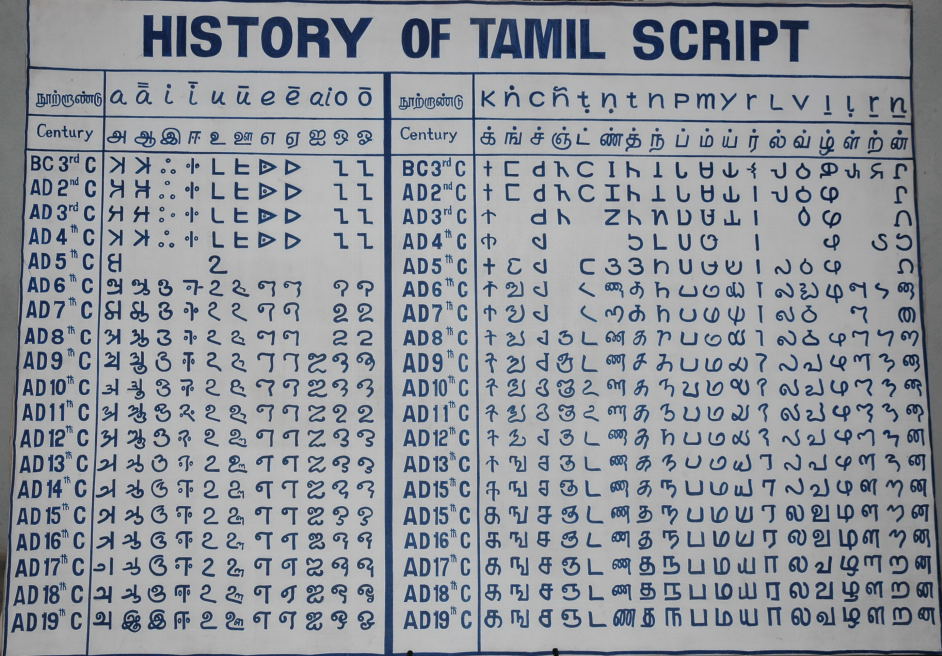
* most importantly...... it's only during kalabhras priod, tamil-brahmi script started metamorphosing into vatteluthu ( rounded script). https://en.wikipedia.org/wiki/Vatteluttu_alphabet and tamil script.
https://upload.wikimedia.org/wikipedia/commons/f/fc/History_of_Tamil_script.jpg
* it's during this period....., four categories( ven-paa, aasiriyap-paa, kalip-paa & vanjip-paa of poetry-system diverged into 12 categories, as they were combined with thaazhisai, thurai and viruththam. 4 * 3 = 12 categories.
* it is during this period....,
avinayam, kaakkaip paadiniyam, naththaththam, pal kaappiyam, pal kaappiyap puranadai & palkaayam in grammar;
nari viruththam, eli viruththam and kili viruththam in philosophy;
seevaha chinthaamani, perungathai in epics;
mooththa thirup pathigam, thiruvirattai manimaalai, arputhath thiruvandhaadhi, kayilai paadhi kaalaththi paadhi thiruvandhaadhi in saivism
and....many more works appeared.
....still dark age?
* it's during this period......, esteemed teachers - buddhadatta mahatherar, thanjai tharumapaalar, sangha mithrar, jothipaalar, sumathi, aacharya thiknaagar, kaanji tharumapaalar, buddha mithrar all appeared. still KANS called this a dark age! and so did the other parrots.
* it futher attempts to inform that after 200AD all religions from north- hinduism, jainism and buddhism- attempted to gain the support of majority; competed with each other; that struggle continued till 600AD. after 600AD, crooked devious designs of bakthism of hinduism ensnared jains and banished buddhism out of tamil land. ( never to forget kazhuvetram கழுவேற்றம்)
* in his addendum, prof A. Marx combines the points and aspects taken from kaarthikesu sivathambi and burton stein; and tries to resolve some questions left unanswered by mr.seeni.
* A. Marx refers to the works drama in ancient tamil society (of kaarthikesu sivathambi) and agriculture and agriculture based political developments in ancient tamil society (of burton stein).
the story behind velvikkudi copper plates shall follow next.......